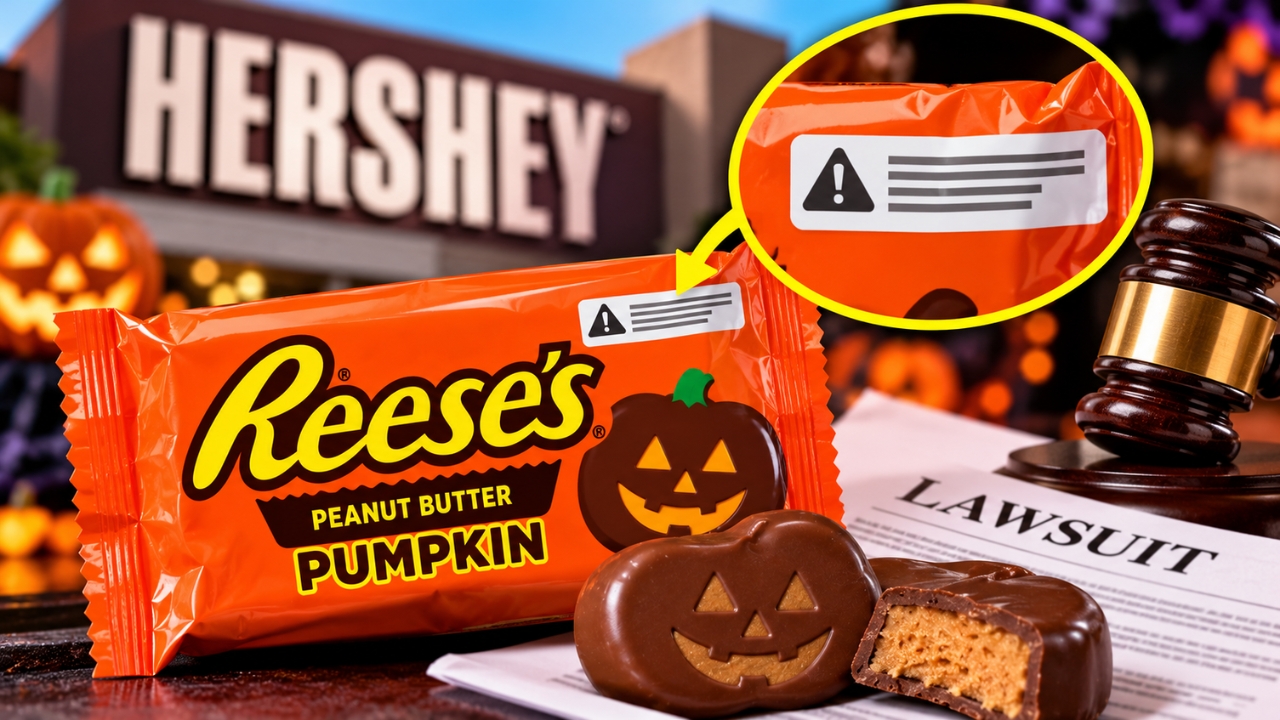
Hershey’s, one of the world’s biggest chocolate and confectionery companies, has made a small but noticeable change to its popular Reese’s Peanut Butter Pumpkins packaging. After facing a deceptive marketing lawsuit, the company added a new disclaimer on the wrapper to make it clear that the carved pumpkin face shown on the pack is not on the actual candy.
This move comes after a class action lawsuit filed by Florida consumers who said they were misled by the jack-o’-lantern style images on the packaging. Although a federal judge dismissed the case twice, Hershey still updated its label wording from “Decorating Suggestion” to “Carving not on actual product.”
The change highlights how consumer expectations, packaging design, and legal pressure can influence even small details on everyday products. It also shows how food companies balance marketing appeal with clear disclosures to avoid confusion.
What Is the Hershey Reese’s Pumpkin Lawsuit?
The Reese’s pumpkin lawsuit is a legal case against The Hershey Company over its seasonal Halloween candy packaging. Plaintiffs claimed that the pumpkin-shaped Reese’s cups were advertised with carved eyes and mouths on the wrapper, but the actual chocolates inside were plain and blank.

In May 2024, four Florida residents—Nathan Vidal, Debra Kennick, Abdjul Martin, and Eduardo Granados—filed a class action suit. They accused Hershey of unlawful, fraudulent, unfair, misleading, and deceptive advertising for several Reese’s products, including the Peanut Butter Pumpkins.
Vidal stated he bought three bags in 2023 because he believed the product contained a “cool-looking carving of a pumpkin’s mouth and eyes.” When he opened them, he found no carvings at all. Hershey argued that reasonable consumers would see the images as suggestions, not promises, and pointed to the existing “Decorating Suggestion” disclaimer.
Overview of the Lawsuit and Hershey’s Response
| Aspect | Details |
| Case Type | Class action lawsuit for deceptive marketing |
| Filed In | May 2024, U.S. District Court, Florida |
| Plaintiffs | Nathan Vidal, Debra Kennick, Abdjul Martin, Eduardo Granados |
| Defendant | The Hershey Company |
| Main Claim | Packaging showed carved pumpkin faces, but actual candy was blank |
| Damages Sought | Around $5 million in total |
| Hershey’s Defense | Images were decorating suggestions; consumers got what they paid for—delicious candy |
| Court Outcome | Case dismissed twice (Sept 2025 and Sept 2026) for lack of proven economic loss |
usatoday+3
New Disclaimer on Reese’s Pumpkin Wrapper
Following the legal battle, Hershey introduced a clearer disclaimer on the front of the Reese’s Peanut Butter Pumpkins wrapper. As of October 6, 2026, the new text reads: “Carving not on actual product.”
This line appears underneath the image of the pumpkin-shaped candy that shows a mouth and eyes carved like a jack-o’-lantern. Earlier packs carried a softer phrase: “Decorating Suggestion.”
Hershey has not officially explained why it changed the wording. However, the timing—soon after the second dismissal of the lawsuit—suggests the company wanted to reduce confusion and limit future legal risk.
Why the Lawsuit Was Dismissed
The case was handled by U.S. District Judge Melissa Damian in Florida. She first dismissed it in September 2025, saying the plaintiffs had not shown they suffered a financial loss from buying the product.
After allowing an amended complaint, Judge Damian dismissed it again on September 16, 2026. She ruled that the buyers experienced only “subjective disappointment,” not quantifiable economic harm that could be compensated in court.

Hershey also argued that reasonable consumers would not expect the carved designs to be physically present on the candy. The court agreed that the plaintiffs “got what they bargained for—delicious candy.”
Impact on Consumers and Brand Trust
Even though Hershey won the lawsuit, the case drew wide media attention and public discussion. Many consumers expressed surprise that the pumpkin faces were only on the packaging, not the chocolate.
The new disclaimer aims to set clear expectations before purchase. For some, this may reduce disappointment; for others, it may highlight how marketing images can be more idealized than real.
For Hershey, the incident underlines the importance of transparent labeling, especially for seasonal and novelty products. Clear wording can help protect brand trust while avoiding future legal challenges.
Key Takeaways for Buyers and Brands
- Consumers should read packaging disclaimers carefully, especially for seasonal candies.
- Marketing images may show idealized or suggested designs, not exact product features.
- Companies may update labels after legal pressure, even if they win in court.
- Clear disclosures help manage consumer expectations and reduce misunderstanding.
- Class action lawsuits often focus on whether buyers suffered real economic loss, not just disappointment.
Final Thoughts
The Hershey Reese’s pumpkin lawsuit shows how small details on candy wrappers can lead to big legal and reputational issues. While the court ruled in Hershey’s favor, the company still chose to add a clearer disclaimer: “Carving not on actual product.”
This change serves as a reminder that packaging design, consumer perception, and legal standards are closely linked. For buyers, it’s a nudge to look beyond attractive images. For brands, it’s a lesson in clarity and transparency to maintain trust and compliance.