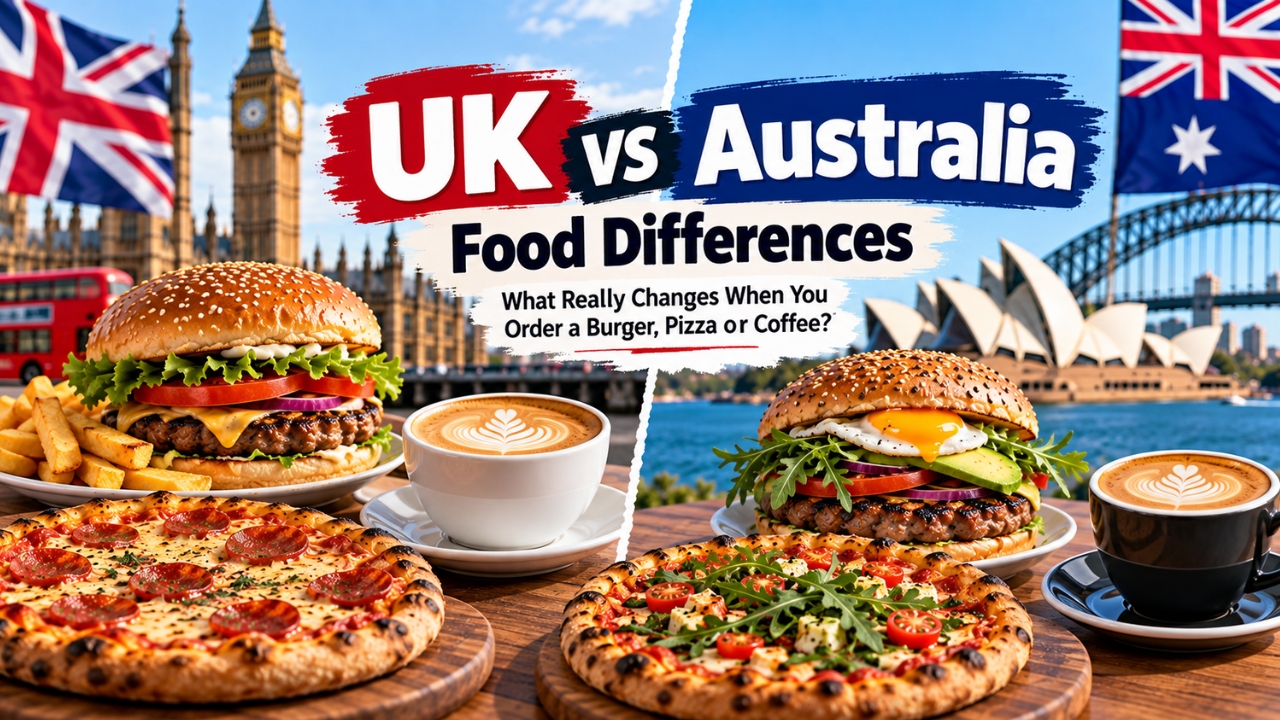
When you move from the United Kingdom to Australia, or just compare menus online, many familiar foods look the same—but small changes in taste, size, and style can surprise you. From burgers and pizza to coffee, these differences come from local tastes, ingredient rules, and cafe culture.
In both countries, global chains exist, yet the way items are served often shifts. Understanding these changes helps you order with confidence and enjoy food the way locals do. This article breaks down the real differences in simple terms.
UK vs Australia Food Differences in Burgers, Pizza, and Coffee
Food in the UK and Australia shares many roots, but daily choices reflect different habits. Australians lean toward fresh, bold flavours and strong coffee culture. The UK has a mix of tradition, convenience, and growing specialty trends.
Even when the brand name is the same, recipes and portion sizes can vary. Local laws on ingredients, dairy, and meat also play a role. These factors shape how a burger, pizza, or coffee actually tastes in each country.
Burger Differences: Menu, Toppings, and Style
Burgers are popular in both nations, but the classic build and toppings differ. In Australia, a “standard” burger often includes extras that are rare in the UK.
- In Australia, many burgers come with beetroot, fried egg, and pineapple as common options.
- In the UK, burgers focus more on cheese, bacon, and gourmet sauces, with beetroot being uncommon.
- Chain names can change: Burger King in the UK is Hungry Jack’s in Australia, with a very similar menu but local twists.
Portion sizes and sides also vary. Australian burgers may feel larger and come with thick-cut chips. UK burgers often have thinner fries and more “meal deal” style pricing.
Pizza Differences: Chains, Toppings, and Dining Style
Pizza chains like Domino’s and Pizza Hut operate in both countries, but the experience can feel different. In Australia, Pizza Hut is mostly delivery and takeaway, while in the UK many outlets still have dine-in restaurants.
Toppings reflect local tastes:
- Australia sees more seafood, ham and pineapple, and BBQ chicken styles.
- The UK has more meat feasts, spicy pepperoni, and vegetarian gourmet options.
Crust styles and sauce sweetness can vary by region, even within the same brand. Australians often prefer a slightly sweeter tomato base, while UK pizzas may lean savoury.
Coffee Differences: Culture, Drinks, and Strength
Coffee is where the gap is widest. Australia has a strong specialty coffee culture, with independent cafes and skilled baristas. The UK has grown fast in specialty coffee, but chains still dominate many high streets.
The most famous difference is the flat white:
- In Australia, a flat white is smaller, with strong espresso and silky microfoam.
- In the UK, flat whites are often larger, sometimes closer to a latte in size and milk ratio.
Other coffee habits also differ:
- Australians prefer sit-down service, quality beans, and manual machines.
- The UK has more takeaway culture, with quick service and a mix of manual and automatic machines.
Prices also vary due to rent, wages, and milk quality. Overall, Australian coffee is often described as bolder and less milky.
UK vs Australia Food Differences (Burger, Pizza, Coffee)
| Feature | United Kingdom (UK) | Australia |
| Common burger toppings | Cheese, bacon, lettuce, tomato, onion | Cheese, bacon, lettuce, tomato, beetroot, egg, pineapple |
| Burger chain name | Burger King | Hungry Jack’s (same brand, different name) |
| Typical burger sides | Thin fries, onion rings, salads | Thick-cut chips, wedges, salads |
| Pizza Hut style | Mix of dine-in, takeaway, delivery | Mostly takeaway and delivery, few dine-in |
| Popular pizza toppings | Meat feast, pepperoni, veggie gourmet | Ham & pineapple, BBQ chicken, seafood |
| Coffee culture | Growing specialty scene; many chains | Strong independent cafe culture; high barista standards |
| Flat white size & style | Often 6–8 oz, more milk, lighter foam | Usually 5–6 oz, strong espresso, velvety microfoam |
| Coffee serving habit | More takeaway, quick service | More sit-down, quality-focused experience |
These differences show how the same food names can mean slightly different things in each country.
Why These UK vs Australia Food Differences Happen
Several factors create these gaps. First, local taste preferences shape menus. Australians grew up with beetroot and egg on burgers, so chains keep them. The UK developed different classic combos.
Second, supply and ingredients matter. Dairy, meat, and produce quality differ, affecting flavour. Coffee beans, roasting styles, and milk texture training also vary between nations.
Third, business models change the experience. In Australia, many cafes compete on quality, not speed. In the UK, high foot traffic and commute patterns support more grab-and-go coffee.
How to Order Smartly in Each Country
If you are visiting or moving, a few tips help:
- For burgers in Australia, try a “standard” or “Aussie burger” to get beetroot and egg.
- In the UK, look for gourmet burger bars for creative toppings and sauces.
- For pizza, check if the outlet is dine-in or takeaway, especially with Pizza Hut.
- For coffee in Australia, order a flat white or long black for strong, smooth espresso.
- In the UK, specify extra shot or less milk if you want a stronger coffee.
Understanding these small changes makes eating out easier and more enjoyable.
FAQs
Q1: Is Burger King called something else in Australia?
Yes. In Australia, Burger King operates as Hungry Jack’s with a very similar menu but some local items.
Q2: Do UK and Australia have the same pizza chains?
Major chains like Domino’s, Pizza Hut, and Subway exist in both, but store styles and toppings can differ.
Q3: Why is Australian coffee considered stronger?
Australian cafes often use smaller cups, more espresso, and silky microfoam, giving a bolder taste than many UK chain drinks.
Q4: What is the most typical Aussie burger topping not found in the UK?
Beetroot and fried egg are classic Australian burger toppings that are rare in the UK.
Q5: Is flat white the same in the UK and Australia?
No. In Australia, a flat white is usually smaller and stronger, while in the UK it is often larger and milkier.