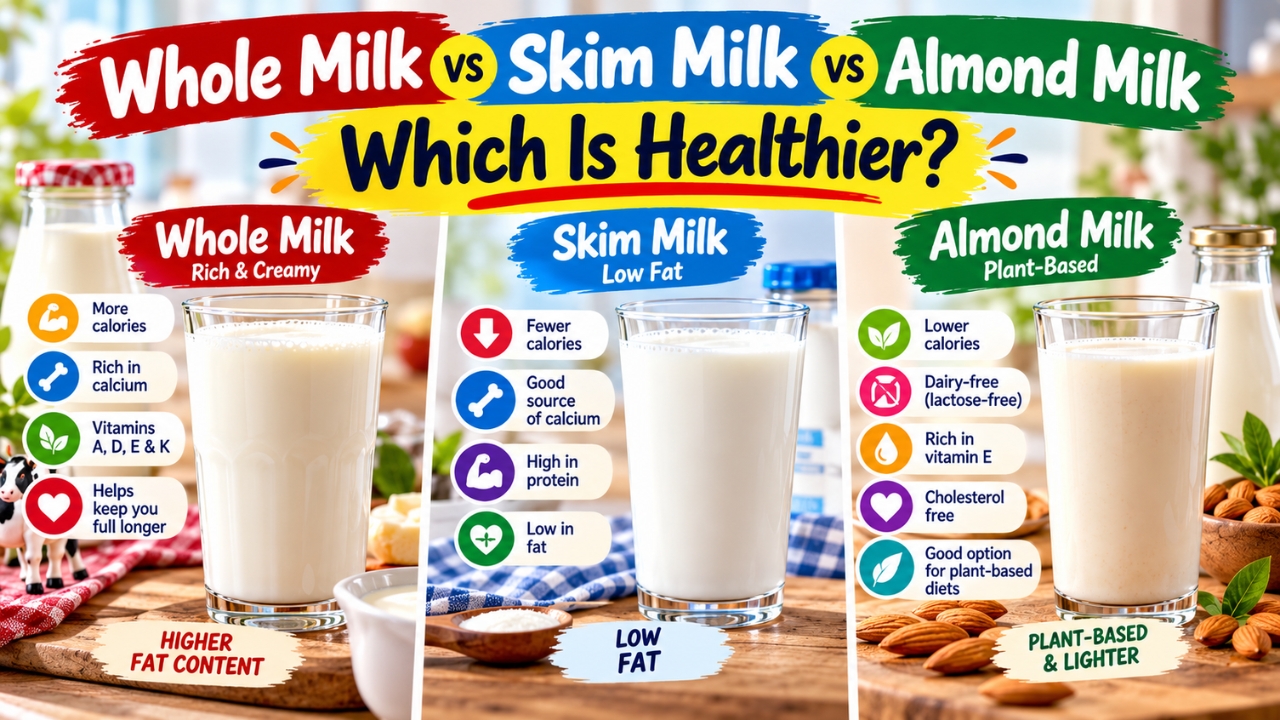
Choosing between whole milk, skim milk, and almond milk depends on what matters most to you: protein, calories, fat, dietary needs, or taste. No single option is healthiest for everyone. The nutrition in almond milk can also change a lot by brand, so checking the carton is important.
Whole and skim milk come from cows and provide similar amounts of protein, carbohydrates, and calcium. Their main difference is fat: whole milk contains more, while skim milk has very little. Almond milk is plant-based and often lower in calories, but usually has much less protein unless it is specially enriched.
Whole, Skim, and Almond Milk at a Glance
The table gives approximate amounts in one cup. Values can vary by brand and whether a product is fortified or sweetened. The almond milk figures below are for a typical unsweetened, fortified product.ask.ifas.
| Nutrition or feature | Whole milk | Skim milk | Unsweetened almond milk |
| Calories | About 149 | About 83 | About 30 |
| Protein | About 8 g | About 8 g | About 1 g |
| Total fat | About 8 g | About 0–0.2 g | About 2.5 g |
| Saturated fat | About 4.5 g | About 0–0.1 g | Usually 0 g |
| Carbohydrates | About 12 g | About 12 g | About 1 g |
| Sugars | About 12 g, naturally occurring | About 12 g, naturally occurring | Often 0 g if unsweetened |
| Calcium | About 276 mg | About 298 mg | About 450 mg if fortified |
| Lactose | Yes | Yes | No |
How Whole Milk Affects Your Choice
Whole milk contains more fat and calories than skim milk, while offering about the same protein and naturally occurring milk sugar. Its fat gives it a richer, creamier taste and may make it more satisfying in drinks, cereal, or cooking.
Whole milk can fit into a balanced eating pattern. However, it has more saturated fat than skim milk, so people watching their saturated-fat intake may prefer a lower-fat option. Consider the rest of your diet and your own health needs rather than judging a food by one nutrient alone.
What Skim Milk Offers
Skim milk keeps much of the protein, calcium, and carbohydrate found in whole milk, but has little to no fat. It may suit people who want cow’s milk’s protein and nutrients while reducing calories and saturated fat.
Skim milk contains lactose, the natural sugar in dairy milk. It is therefore not suitable for people who need to avoid lactose unless the product is specifically labelled lactose-free. Its thinner taste can also be less appealing to some people.
Almond Milk: Benefits and Limits
Almond milk is made from almonds and water, and is naturally free of dairy and lactose. Unsweetened versions are often low in calories and carbohydrates. This can make almond milk useful for people avoiding dairy or looking for a lighter drink.
The main drawback is protein: a typical cup has about 1 gram, compared with roughly 8 grams in cow’s milk. Some almond milk is fortified with calcium and vitamins, but fortification differs between products. Check the label instead of assuming every carton provides the same nutrients.
Sweetened and flavoured almond milks may contain added sugar. If you choose almond milk, look for unsweetened and fortified on the package, then compare the amounts of protein, calcium, and vitamin D. Also check for almond allergy warnings.
Which Milk Is Healthier for You?
The best choice depends on your goals and dietary needs:
- Choose skim milk if you want cow’s milk protein and calcium with very little fat.
- Choose whole milk if you prefer a richer taste and want the higher-fat version of dairy milk.
- Choose unsweetened, fortified almond milk if you avoid dairy or lactose, or want a lower-calorie drink.
- Compare labels because brands can differ in calories, added sugar, protein, calcium, and vitamin D.
- Plan protein elsewhere if almond milk is your main milk substitute, since most versions provide much less protein than cow’s milk.
For children, pregnancy, medical conditions, or a diet that excludes several food groups, individual nutrition needs can differ. A healthcare professional or registered dietitian can help identify suitable choices.
Frequently Asked Questions
Is almond milk healthier than cow’s milk?
Not in every way. Almond milk is often lower in calories and contains no lactose, but it usually has much less protein. Fortified almond milk can provide calcium, though the amount varies by brand.
Does skim milk have less protein than whole milk?
Usually, no. Whole and skim milk provide about the same amount of protein per cup. Skim milk mainly differs by having much less fat and fewer calories.
Is almond milk a good source of calcium?
It can be if it is fortified. Some products provide a substantial amount, while others may have less. Check the nutrition label for calcium and vitamin D.
Can people with lactose intolerance drink almond milk?
Almond milk contains no lactose, so it can be an option for people avoiding lactose. It is not suitable for anyone with an almond allergy, and it does not provide the same protein as cow’s milk.
What should I check on the carton?
Look at protein, calcium, vitamin D, calories, and added sugars. For almond milk, also check whether it is fortified and unsweetened. Product recipes vary, so the label is the most useful guide.